
Introduction
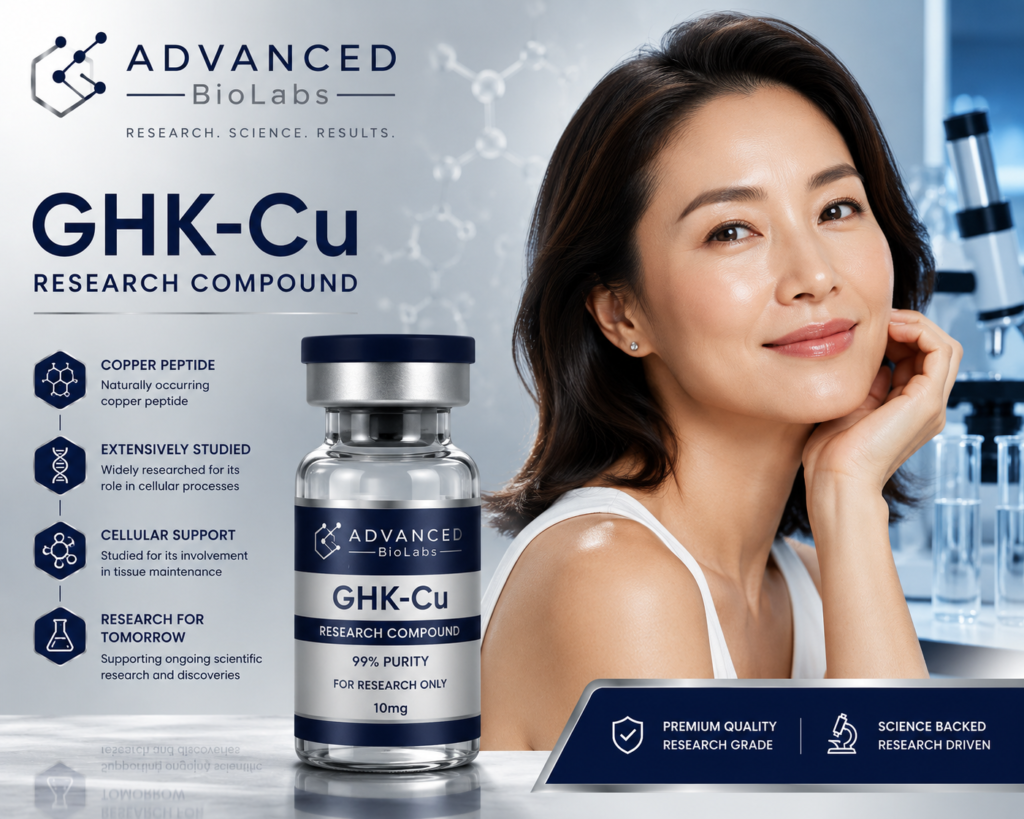
GHK-Cu is a naturally occurring copper peptide that has attracted significant attention in scientific research. First identified in human plasma, GHK-Cu has been studied for its potential role in cellular processes, tissue maintenance, and skin-related research.
Today, GHK-Cu remains one of the most widely researched peptides in wellness and longevity-focused scientific communities.
What is GHK-Cu?
GHK-Cu stands for Glycyl-L-Histidyl-L-Lysine Copper. It is a naturally occurring peptide that binds with copper ions and is found in various tissues throughout the body.
Researchers have studied GHK-Cu for decades because of its involvement in cellular signaling and biological processes.
Why is GHK-Cu Important?
Scientists continue to investigate GHK-Cu because of its association with:
- Cellular communication
- Tissue maintenance
- Skin-related research
- Biological regeneration processes
- Healthy aging research
Current Areas of Research:
Skin Research
GHK-Cu has become widely known in skin-focused research because of its involvement in cellular activity associated with skin health.
Hair Research
Researchers continue to investigate the peptide’s relationship with scalp and hair-related biological processes.
Cellular Health
Scientific studies explore how GHK-Cu interacts with cellular signaling pathways involved in maintenance and repair processes.
Frequently Asked Questions (FAQs):
What does GHK-Cu stand for?
GHK-Cu stands for Glycyl-L-Histidyl-L-Lysine Copper.
Is GHK-Cu naturally occurring?
Yes. GHK-Cu is naturally found within the human body.
Why do researchers study GHK-Cu?
Researchers investigate GHK-Cu because of its involvement in cellular processes, tissue maintenance, and skin-related biological functions.
Learn More
Interested in learning more about research-focused wellness products and educational resources?
Explore the Advanced BioLabs collection to discover premium research compounds and wellness-focused products designed for informed decision-making.
You may also browse our GHK-Cu product page for additional information and product details.
To learn more about our mission, quality standards, and commitment to research-focused products, visit our About Us page.
Continue exploring our growing library of educational articles covering NAD+, GHK-Cu, MOTS-c, peptide research, cellular health, and healthy aging topics.
Conclusion
GHK-Cu remains one of the most extensively researched copper peptides in modern scientific literature. Ongoing research continues to explore its relationship with cellular health, tissue maintenance, and healthy aging.