
Limited-time offers available now. Explore our premium wellness selection today. Shop Now

What Is Tirzepatide? A Beginner’s Guide

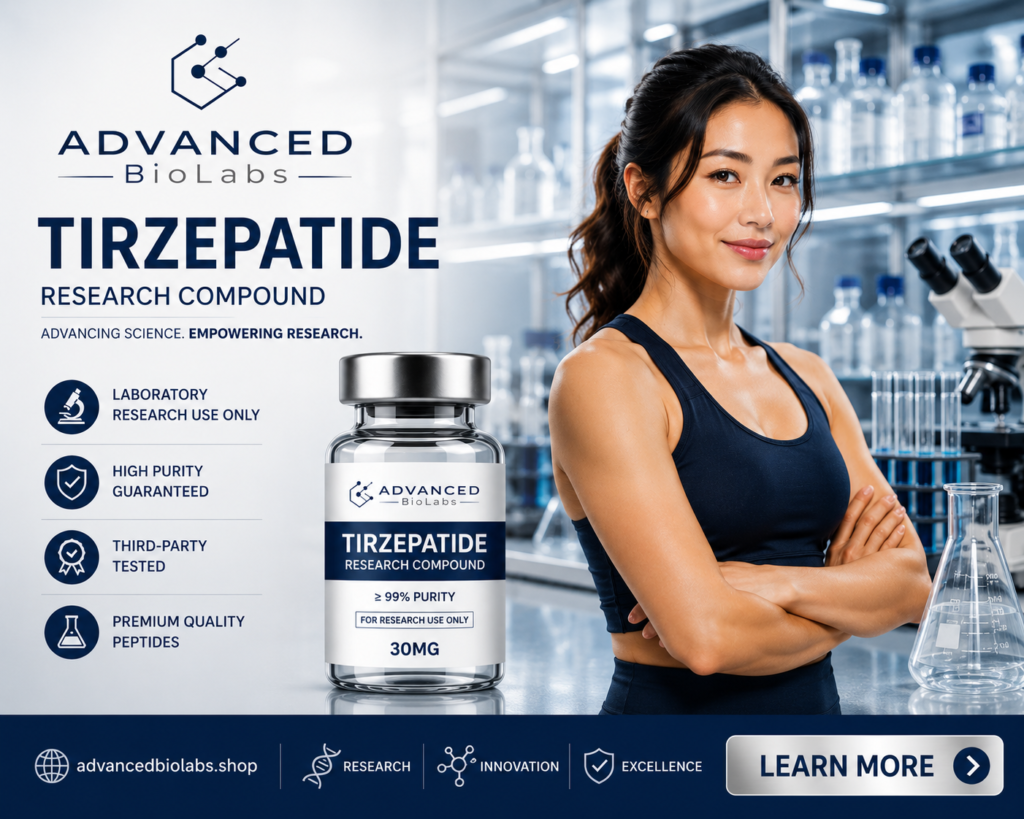
Tirzepatide research compound vial by Advanced BioLabs with fit Asian woman in laboratory setting

Introduction

Tirzepatide has become one of the most talked-about peptides in metabolic research. Scientists continue studying tirzepatide because of its unique interaction with biological pathways involved in energy regulation and metabolism.

As interest in wellness, longevity, and performance optimization grows, tirzepatide remains a major focus of ongoing scientific investigation.


What is Tirzepatide?

Tirzepatide is a synthetic peptide developed for research purposes. Researchers study how it interacts with specific biological receptors involved in metabolic function and nutrient utilization.

Its unique structure has made it an important subject in modern scientific research.


Why are Researchers Interested in Tirzepatide?

Researchers continue studying tirzepatide because of its relationship to:

  • Metabolic processes
  • Energy regulation
  • Nutrient utilization
  • Cellular signaling pathways
  • Overall wellness research

Scientific understanding continues to evolve as new studies are conducted.


Current Areas of Research:

Metabolic Health Research

Researchers investigate how tirzepatide interacts with pathways associated with metabolism and energy balance.

Energy Utilization

Studies explore how tirzepatide may influence biological systems involved in energy management.

Scientific Innovation

Tirzepatide represents an exciting area of ongoing peptide research and continues to attract attention from researchers worldwide.


Frequently Asked Questions (FAQs):

What is tirzepatide?

Tirzepatide is a synthetic peptide currently being studied in metabolic and wellness research.

Why is tirzepatide popular?

Researchers are interested in tirzepatide because of its unique interaction with biological pathways involved in metabolism and energy regulation.

Is tirzepatide naturally occurring?

No. Tirzepatide is a laboratory-developed peptide used in research settings.

Is research still ongoing?

Yes. Scientists continue to investigate tirzepatide and its potential role in various areas of metabolic research.


Learn More

If you’re interested in learning more about research-focused wellness products, visit the Advanced BioLabs homepage to explore educational resources and product information.

You can also browse our Tirzepatide product page for additional information about tirzepatide research compounds and related wellness topics.

To learn more about our mission, quality standards, and commitment to research-focused products, visit our About Us page.


Conclusion

Tirzepatide continues to be an important subject in peptide and metabolic research. As scientific investigations expand, researchers continue exploring its biological properties and potential applications within wellness-focused studies.
Understanding GHK-Cu: What Researchers Are Studying

Introduction

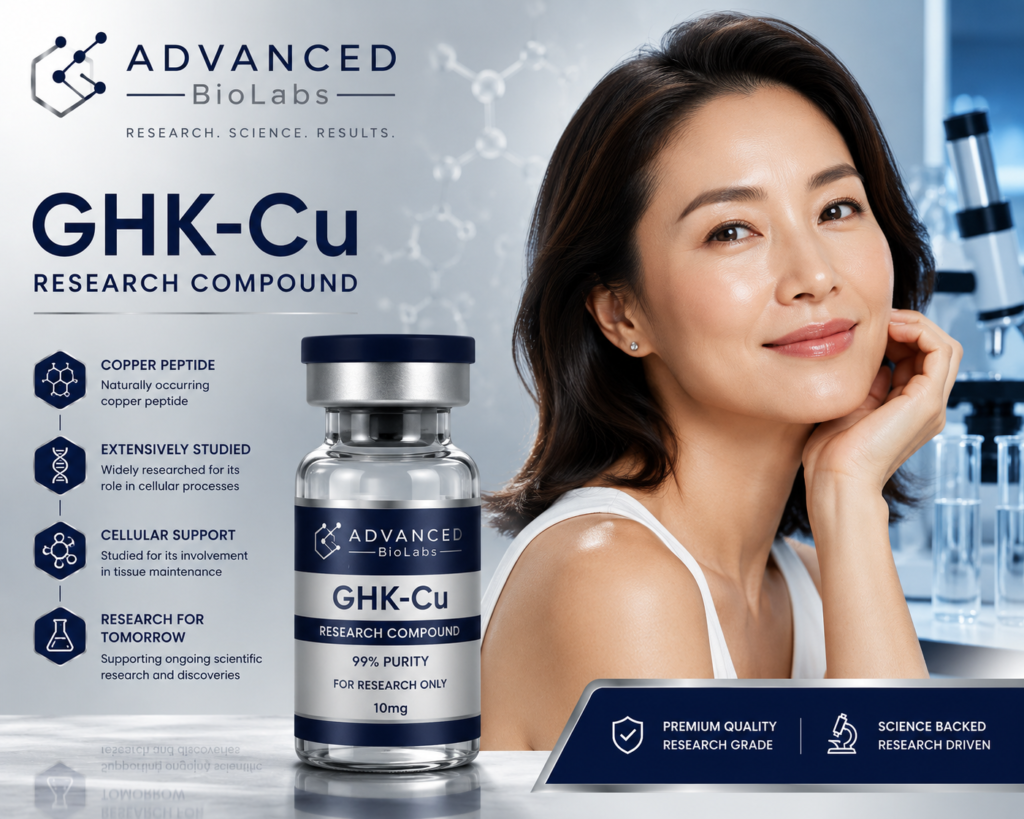
GHK-Cu is a naturally occurring copper peptide that has attracted significant attention in scientific research. First identified in human plasma, GHK-Cu has been studied for its potential role in cellular processes, tissue maintenance, and skin-related research.

Today, GHK-Cu remains one of the most widely researched peptides in wellness and longevity-focused scientific communities.

What is GHK-Cu?

GHK-Cu stands for Glycyl-L-Histidyl-L-Lysine Copper. It is a naturally occurring peptide that binds with copper ions and is found in various tissues throughout the body.

Researchers have studied GHK-Cu for decades because of its involvement in cellular signaling and biological processes.

Why is GHK-Cu Important?

Scientists continue to investigate GHK-Cu because of its association with:

  • Cellular communication
  • Tissue maintenance
  • Skin-related research
  • Biological regeneration processes
  • Healthy aging research

Current Areas of Research:

Skin Research

GHK-Cu has become widely known in skin-focused research because of its involvement in cellular activity associated with skin health.

Hair Research

Researchers continue to investigate the peptide’s relationship with scalp and hair-related biological processes.

Cellular Health

Scientific studies explore how GHK-Cu interacts with cellular signaling pathways involved in maintenance and repair processes.

Frequently Asked Questions (FAQs):

What does GHK-Cu stand for?

GHK-Cu stands for Glycyl-L-Histidyl-L-Lysine Copper.

Is GHK-Cu naturally occurring?

Yes. GHK-Cu is naturally found within the human body.

Why do researchers study GHK-Cu?

Researchers investigate GHK-Cu because of its involvement in cellular processes, tissue maintenance, and skin-related biological functions.

Learn More

Interested in learning more about research-focused wellness products and educational resources?

Explore the Advanced BioLabs collection to discover premium research compounds and wellness-focused products designed for informed decision-making.

You may also browse our GHK-Cu product page for additional information and product details.

To learn more about our mission, quality standards, and commitment to research-focused products, visit our About Us page.

Continue exploring our growing library of educational articles covering NAD+, GHK-Cu, MOTS-c, peptide research, cellular health, and healthy aging topics.

Conclusion

GHK-Cu remains one of the most extensively researched copper peptides in modern scientific literature. Ongoing research continues to explore its relationship with cellular health, tissue maintenance, and healthy aging.

What Is NAD+? A Beginner’s Guide

Introduction

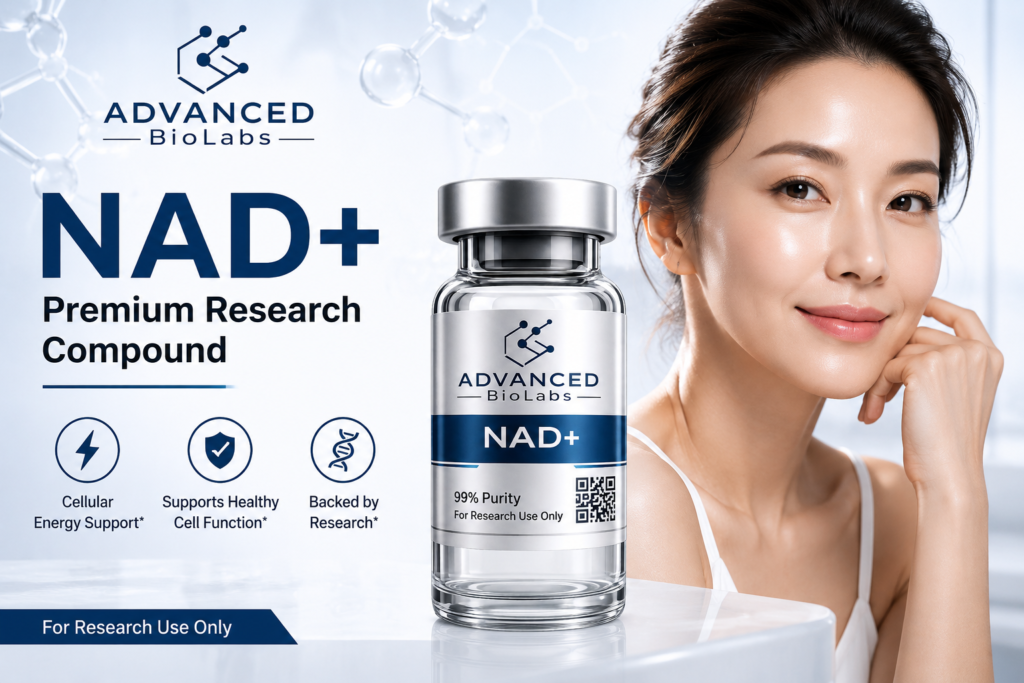
NAD+ (Nicotinamide Adenine Dinucleotide) is a coenzyme found naturally in all living cells. It plays a central role in energy production and cellular function, making it one of the most researched molecules in the fields of metabolism, cellular health, and healthy aging.

As interest in wellness and performance optimization grows, NAD+ has become a popular topic among researchers and health enthusiasts alike.

What is NAD+?

NAD+ is a molecule that helps cells convert nutrients into usable energy. It is involved in hundreds of biological processes and is essential for maintaining normal cellular activity.

Without adequate NAD+, cells cannot efficiently produce the energy required to perform daily functions.

Why is NAD+ Important?

Researchers study NAD+ because it plays a role in:

  • Cellular energy production
  • Mitochondrial function
  • Metabolic processes
  • DNA repair mechanisms
  • Cellular communication

These functions make NAD+ an important area of ongoing scientific research.

Current Areas of Research:

Scientists continue to investigate NAD+ in relation to:

Energy Metabolism

NAD+ is involved in biochemical pathways that help convert food into cellular energy.

Cellular Health

Research explores how NAD+ contributes to maintaining healthy cellular processes.

Healthy Aging

NAD+ levels naturally decline with age, leading researchers to investigate its role in age-related biological changes.

Frequently Asked Questions (FAQs):

What does NAD+ stand for?

NAD+ stands for Nicotinamide Adenine Dinucleotide.

Is NAD+ naturally found in the body?

Yes. NAD+ is naturally present in all living cells.

Why is NAD+ studied?

Researchers investigate NAD+ because of its role in energy metabolism, cellular function, and overall biological processes.

Learn More

If you’re interested in learning more about research-focused wellness products, visit the Advanced BioLabs homepage to explore our growing collection of educational resources and product information.

You can also browse our NAD+ product page for additional details about NAD+ research compounds and related wellness topics.

To learn more about our mission, quality standards, and commitment to research-focused products, visit our About Us page.

Conclusion

NAD+ remains one of the most widely researched molecules in modern wellness and cellular science. As research continues, scientists are learning more about its role in energy production, metabolism, and cellular health.